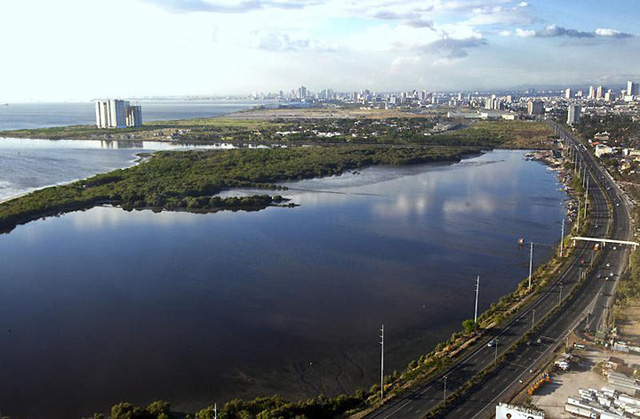
But what's there to see in Manila besides the busy streets, bargain shops and government offices. Manila is actually considered by many as the history capital of the National Capital Region. Rich with old houses, structures and even walls, you know why it is treated with much respect and is regarded as a "must-go-to" when you visit the country.
 |
| from: http://images.placesonline.com |
Manila is located in the eastern shore of Manila Bay and is bordered by the cities of Navotas and Caloocan to the north; Quezon City and San Juan to the northeast; Mandaluyong to the east; Makati to the southeast, and Pasay to the south. In 1976, a conglomeration of four cities - Manila, Pasay, Kalookan and Quezon City - and 13 municipalities was officially designated as "Metro Manila".
It began as a small tribal settlement on the banks of the Pasig River near the mouth of Manila Bay. It took its name from a white-flowered mangrove plant - the nilad - which grew in abundance in the area. Maynilad, or where the nilad grows, was a fairly prosperous Islamic community ruled by Rajah Sulayman, descendant of a royal Malay family.
On May 24, 1570, almost 50 years after Ferdinand Magellan, a Spanish expedition under Marshal Martin de Goiti reached Sulayman's settlement. Encountering resistance from the Muslim king, de Goiti retaliated by burning down the villages and capturing the artillery. The following year, Spanish conquistador Miguel Lopez de Legazpi arrived at the mouth of the Pasig River and claimed the islands in the name of the King of Spain. He established the "distinguished and ever loyal city" of Manila, proclaiming it as the capital. Thus began more than 300 years of Spanish colonization of the Philippines.
The new city was encircled by double walls - Intramuros - and guarded by a fort - Fort Santiago. The Spanish kept to their enclave and sent out their missionaries and armies to conquer the countryside. In the suburbs or arabales like Tondo, Sta. Cruz, Quiapo, Sampaloc, and Malate, the indios - as the natives were called - lived and worked together with the mestizos (of mixed Filipino and foreign descent). The sangleys or Chinese merchants lived in the parian, a district which became part of the present Binondo.
(source: http://www.manila.ph/manila/info/history01.html)
Since it is the center during the long Spanish colonization it is surely full of historical sites and like what they say, history lives in its walls. Here are some Historical sites you might want to see in the city of Manila. (source: http://manila.gov.ph/tourism/historical-landmarks/)

- Rizal Shrine - The restored shrine inside Fort Santiago houses Rizaliana items in memory of the Philippine national hero Dr. Jose Rizal spent his last few days here before he was executed on December 30, 1896. Among the objects exhibited are various books and manuscripts about the national hero; sketches, paintings, wood curvings and sculptures done by the hero; paraphernalia and souvenirs acquired during his several trips abroad and collections of colonial-style furnitures from his hometown in Calamba, Laguna.

- Manila Bay- Considered the finest harbor in the far east where the famous 'Battle of Manila Bay' was fought between the Americans and the Spaniards in 1898. Many historians believed that the Manila-Acapulco Galleon Trade between Philippines and Mexico, principally because of the strategic location of Manila Bay. The Galleon Trade lasted for 244 years.
- Malacañang Palace -Seat of the head of the Government of the Philippines since Spanish times, officially stands on the north bank of the Pasig River whose legendary beauty celebrated in song. Malacañang, from the vernacular 'May Lakan Diyan' meaning 'There lives a noble man', expansion of the city's free educational system and health care delivery and maintenance of the city government's strong financial position through intensified revenue generation and judicious fiscal management. City executives, councilors, civil servants and peace officer unite to achieve the vision of peace and good quality of life for its people.
- China Town (Binondo) - The Chinatown which is located along the northern bank of the historic Pasig River symbolizes the long history of the Chinese presence in the Philippines long before the arrival of the Spaniards. The Chinese had been much involved in the business specially the retail trade and have been absorbed in a Philippine life-style.
- Bonifacio Shrine - Built to pay homage to our great hero Gat. Andres Bonifacio whose courage and conviction in fighting for freedom & independence serve as an inspiration for the youth.
- Mabini Shrine - Apolinario Mabini, the intellectual leader of the Philippine revolution, lived in this house as a law student, a lawyer and worker who advocated Philippine Independence from Spain. During the American occupation, it was much frequented by foreign correspondents who found Mabini both interesting and informative and become the intellectual headquarters of the first Philippine Republic.
- Plaza San Luis - amed after one of the old barrios of Intramuros, this is a cultural-cum-commercial complex currently composed of five houses - Casa Manila, Casa Urdaneta, Casa Blanca, Los Hidalgos and El Hogar Filipino. Plaza San Luis will eventually consist of 9 houses representing different areas in Filipino/Hispanic architecture. Aside from gift and specialty shops, the complex has a museum at Casa Manila, containing the 19th century and early 20th century furnitures found in a typical filipino illustrado or the priviledged class home.
- Ermita District - Originally known as 'Lagyo'. In 1951, a chapel was constructed for Nuestra Señora de Guia. A Mexican hermit arrived in the place, lived in the chapel, and people called it as 'La Ermita'. Ermita was a fishing village prior to arrival of the Spaniards that moved out of Intramuros and integrated with the Indios in Ermita and adjacent Malate and to a lesser extent, Paco. These became a fashionable residential areas in the Spanish era up to the American era.

- Fort Santiago - Marks
its entrance on the northwestern trip to Instramuros which started in
1571 and completed nearly 150 years later by Filipino forced labor. The
pre-Spanish settlement of Rajah Sulayman was a wooden fort on the ashes
of which was built the Spanish fortress which was Spain's major defense
position in the island. It looked out on the sea, towards which its
canons were trained forward off pirates and invaders. Also known as the
'Shrine of Freedom', in memory of the heroic Filipinos imprisoned and
killed here during the Spanish and Japanese eras. Partly rebuilt from
the ruins of World War II, it is now a park and promenade housing a
resident theaters for both traditional and modern plays

- Manila Cathedral - The seat of the Catholic Archdiocese of Manila, is presently the 6th cathedral to rise on the site since 1581. Previous structures were destroyed by typhoons, earthquake and fire during the last war. Rebuilt on the second half of the 50's through the efforts of Architect Fernando Ocampo and Archbishop Rufino J. Santos. The cathedral incorporated the stone carvings and rosette windows of the old cathedral. Stained glass windows celebrating the Christianization of the Philippine light up with its clerestory. Mosaic artwork decorated three of its side chapels.
- Minor Basilica of the Black Nazarene (Quiapo Church) - Quiapo Church, also known as the Minor Basilica of the Black Nazarene, is the site of the annual January Black Nazarene procession. One of Manila’s most famous churches, Quiapo Church gets very crowded every Friday when thousands of devotees come to light a candle in supplication to the Black Nazarene, a life-size image of Christ believed to be miraculous. The present cream-colored edifice was built after the original Mexican Baroque structure burned to the ground in 1928. Quiapo is also famous for the Black Nazarene. The Feast Day of the Black Nazarene (also known as Quiapo Day) is celebrated every January 9th.
- San Agustin Church - The San Agustin Church and Museum which is a private museum under the supervision of the Augustinian Friars is housed inside the Old Monastery of the church. The collections include 26 huge oil paintings of saints, the Don Luis Araneta Collection of Antiques, the crypt where Philippine Notables are buried, leads to the refractory with its fine collection of colonial religious art, the Capitulation room where the Spanish surrendered to the Americans in 1898, the Sacristy which house antique carrosas, richly embroidered vestments, a wonderful Saint Michael and famous choir hand carved from Molave wood that dates back to 1614.

- Abbey of Our Lady of Montserrat (San Beda Church)- The Abbey Church of Our Lady of Montserrat within the San Beda College compound is being managed by Benedictine monks. Completed in 1926, it boasts of a Neo-baroque interior and a Neo-gothic exterior. (source: http://www.mb.com.ph/cbcp-lists-7-churches-for-visita-iglesia/) It is initially for the Benedictine monks who have their convent (or as they call it Abbey) just beside the church. They have masses during 6am which is actually a high mass since all the monks, priests, novices are all in there as they celebrate the start of their day. They believe in the teaching of St. Benedict of Nursia, Ora et Labora (Prayer & work) and live it. (feel free to ask me more questions with regards the Benedictine Monks & their practice you may ask me by messaging me thru the comments box, I'd be glad to answer them)
- Recollect-run Basilica Minore de San Sebastián - The seat of the National Shrine of Our Lady of Mt. Carmel, is the only all-steel church in Asia and allegedly the only prefabricated steel church in the world.(source: http://www.mb.com.ph/cbcp-lists-7-churches-for-visita-iglesia/)
- National Shrine of St. Jude Thaddeus - the evangelization and pastoral care of the Chinese in Manila came under the Dominicans. Eventually, the Chinese Parish was attached to the Binondo Parish. This arrangement lasted until 1954. In that year, Archbishop Rufino J. Santos obtained from the Roman Consistorial Congregation to the faculty to erect three more parishes for the Chinese. One of these was St. Jude Parish. Knowing that St. Jude is the patron of the hopeless, people attend the weekly novena to St. Jude which started in June 1959 and has been held every Thursday since then. (source: http://www.stjudeshrinemanila.ph/)
 |
| from: http://www.starcity.com.ph |
- Star City -The acknowledged pioneer in mixing amusement with retail, Star City focuses on providing families with maximum enjoyment through a stimulating array of indoor and outdoor attractions to captivate both the young and the young at heart. Rides that spin, twirl, and zoom… live shows that provide the thrills and spills… a collection of haunts and destinations to fulfill your greatest fantasies… and a scoop of fun foods and goodies all blend together to give you a fantastic day out – without spending a fortune. Star City, housed within the CCP Complex in Pasay, is truly big on family fun. (source: http://www.starcity.com.ph/about-us/)
 |
| from: http://lifestyle.inquirer.net/ |
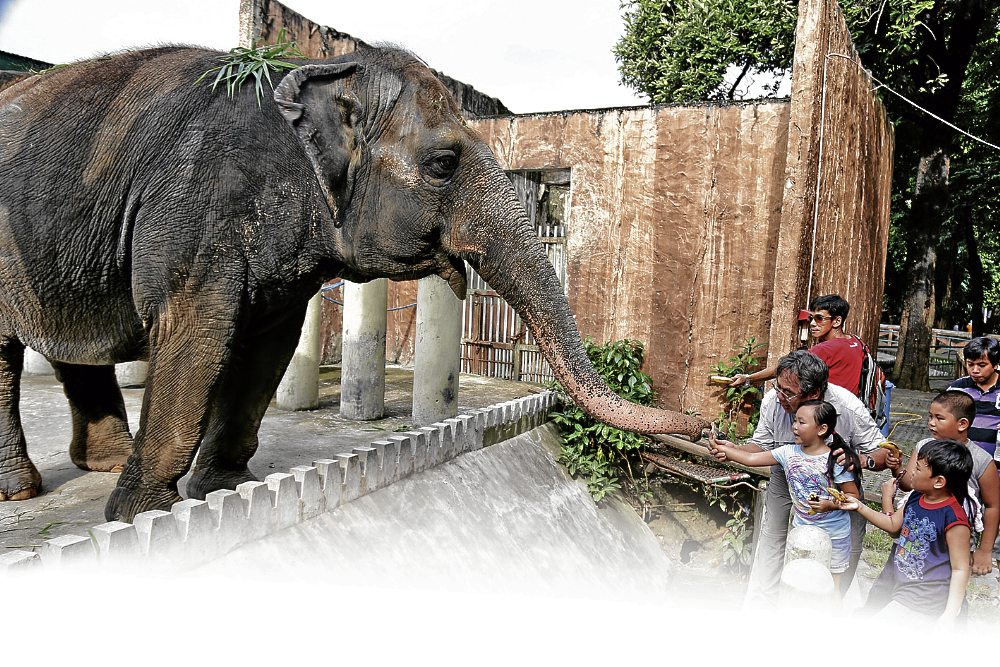
- Manila Zoo - On July 25, 1959, the Manila Zoological and Botanical Garden opened its doors to the public. It serves as one of the educational centers in the country where the viewing public can observe, discover and learn interesting facts about the beauty of Philippine fauna and flora. Manila Zoo has a land area of 5.5 hectares and has a current population of about 500 animals. Located along Adriatico St., Manila, the Zoo also has canteens, souvenir shops, boating rentals at the lagoon and several playgrounds that cater to children and tourists. (source: http://manila.gov.ph/tourism/manila-zoological-and-botanical-garden/)

- Manila Ocean Park -Manila Ocean Park is the country's first world-class marine theme park and a premiere educational facility. An
integrated urban resort with marine life attractions and aqua-themed
hotel, the park is geared towards an all-year, all-weather destination
for locals and tourists. Everyday is a holiday and an ultimate fun place
for all ages.
And if you feel a bit tired and just wanna chill out, check out the malls and do some retail therapy:
(source:http://manila.gov.ph/tourism/shopping-malls/)
- SM MALLS - SM City Manila, part of the country's largest chain of malls, stands behind the Manila City Hall. Besides SM City Manila, two other SM Supermalls were established in the city, the SM Quiapo and the SM City San Lazaro, which became one of the most premiere malls of the city.
- Robinsons Place Manila, the biggest mall in the city
- Harrison Plaza, one of the city's oldest shopping malls.
- FLEA MARKETS & MALLS - The city, despite being modern, has flea markets in the areas of Divisoria and Quiapo, where cheap buys or goods are being sold at rock-bottom prices. There are also malls located in these flee markets the famous are Tutuban Mall, 168 Mall, Lucky Chinatown (newest, high end) & Divisoria Mall in Divisoria and Isetan mall in Quiapo.
Truely Manila has so much to offer for tourists and even locals. That's what the songs trying to tell us...
I walked the streets of san francisco
I’ve tried the ride in disney land
Dated a million girls in sydney
Somehow i feel like i don’t belong
Hinahanap-hanap kita manila
Ang ingay mong kay sarap sa tenga
Mga jeepney mong nagliliparan
Mga babae mong naggagandahan
Take me back in your arms manila
And promis me you’ll never let go
Promise me you’ll never let go
 |
| Send "Manila" Ringtone to your Mobile |
 |
Maraming beses na kitang nilayasan
Iniwanan at iba'ang pinuntahan
Parang bababeng ang hirap talagang malimutan
Ikaw lamang ang aking laging binabalikan
(Quiapo Quiapo Quiapo, isa na lang ah, aalis na. Para!)
Manila
I keep coming back to Manila
Simply no place like Manila
Manila, I'm coming home
I walked the streets of San Francisco
I've tried the rides in Disneyland
Dated a million girls in Sydney
Somehow I feel like I don't belong
Hinahanap hanap kita Manila
Ang ingay mong kay sarap sa tenga
Mga jeepney mong nagliliparan
Mga babae mong naggagandahan
Take me back in your arms Manila
And promise me you'll never let go
Promise me you'll never let go
Iniwanan at iba'ang pinuntahan
Parang bababeng ang hirap talagang malimutan
Ikaw lamang ang aking laging binabalikan
(Quiapo Quiapo Quiapo, isa na lang ah, aalis na. Para!)
Manila
I keep coming back to Manila
Simply no place like Manila
Manila, I'm coming home
I walked the streets of San Francisco
I've tried the rides in Disneyland
Dated a million girls in Sydney
Somehow I feel like I don't belong
Hinahanap hanap kita Manila
Ang ingay mong kay sarap sa tenga
Mga jeepney mong nagliliparan
Mga babae mong naggagandahan
Take me back in your arms Manila
And promise me you'll never let go
Promise me you'll never let go
Read more at http://www.songlyrics.com/hotdog/manila-lyrics/#VbF9JclGZX5JIWfO.99
|
| Send "Manila" Ringtone to your Mobile |
|
Maraming beses na kitang nilayasan
Iniwanan at iba'ang pinuntahan
Parang bababeng ang hirap talagang malimutan
Ikaw lamang ang aking laging binabalikan
(Quiapo Quiapo Quiapo, isa na lang ah, aalis na. Para!)
Manila
I keep coming back to Manila
Simply no place like Manila
Manila, I'm coming home
I walked the streets of San Francisco
I've tried the rides in Disneyland
Dated a million girls in Sydney
Somehow I feel like I don't belong
Hinahanap hanap kita Manila
Ang ingay mong kay sarap sa tenga
Mga jeepney mong nagliliparan
Mga babae mong naggagandahan
Take me back in your arms Manila
And promise me you'll never let go
Promise me you'll never let go
Iniwanan at iba'ang pinuntahan
Parang bababeng ang hirap talagang malimutan
Ikaw lamang ang aking laging binabalikan
(Quiapo Quiapo Quiapo, isa na lang ah, aalis na. Para!)
Manila
I keep coming back to Manila
Simply no place like Manila
Manila, I'm coming home
I walked the streets of San Francisco
I've tried the rides in Disneyland
Dated a million girls in Sydney
Somehow I feel like I don't belong
Hinahanap hanap kita Manila
Ang ingay mong kay sarap sa tenga
Mga jeepney mong nagliliparan
Mga babae mong naggagandahan
Take me back in your arms Manila
And promise me you'll never let go
Promise me you'll never let go
Read more at http://www.songlyrics.com/hotdog/manila-lyrics/#VbF9JclGZX5JIWfO.99